
Mission profiles
Four profiles the architecture is built for. Each one sets out what the vessel carries, how far it goes, and how it works alongside on the day.
What every profile shares
The same boat does all four. That is the point.
Nothing below is a variant. The hull, the structure, the energy system, the closures and the compartment interface are identical across every profile on this page — what changes is what goes in the 42.63 m³.
A platform built around a sensor has to be redesigned when the sensor changes. A platform built around a volume does not. The compartment is a rectangle with power, data and a dry one-atmosphere environment inside it, and what an operator puts in that rectangle is not the vessel's problem.
That is also why the range profile is quoted in two legs rather than one number. 4,528 km of diesel transit at 6 kn with the mast up gets the vessel to an operating area. 486 km submerged at 4 kn on the battery covers the part where being seen matters. Quoting the sum as though it were all submerged would be a misstatement of what the hardware does.
01 · Mission profile
Naval logistics and resupply
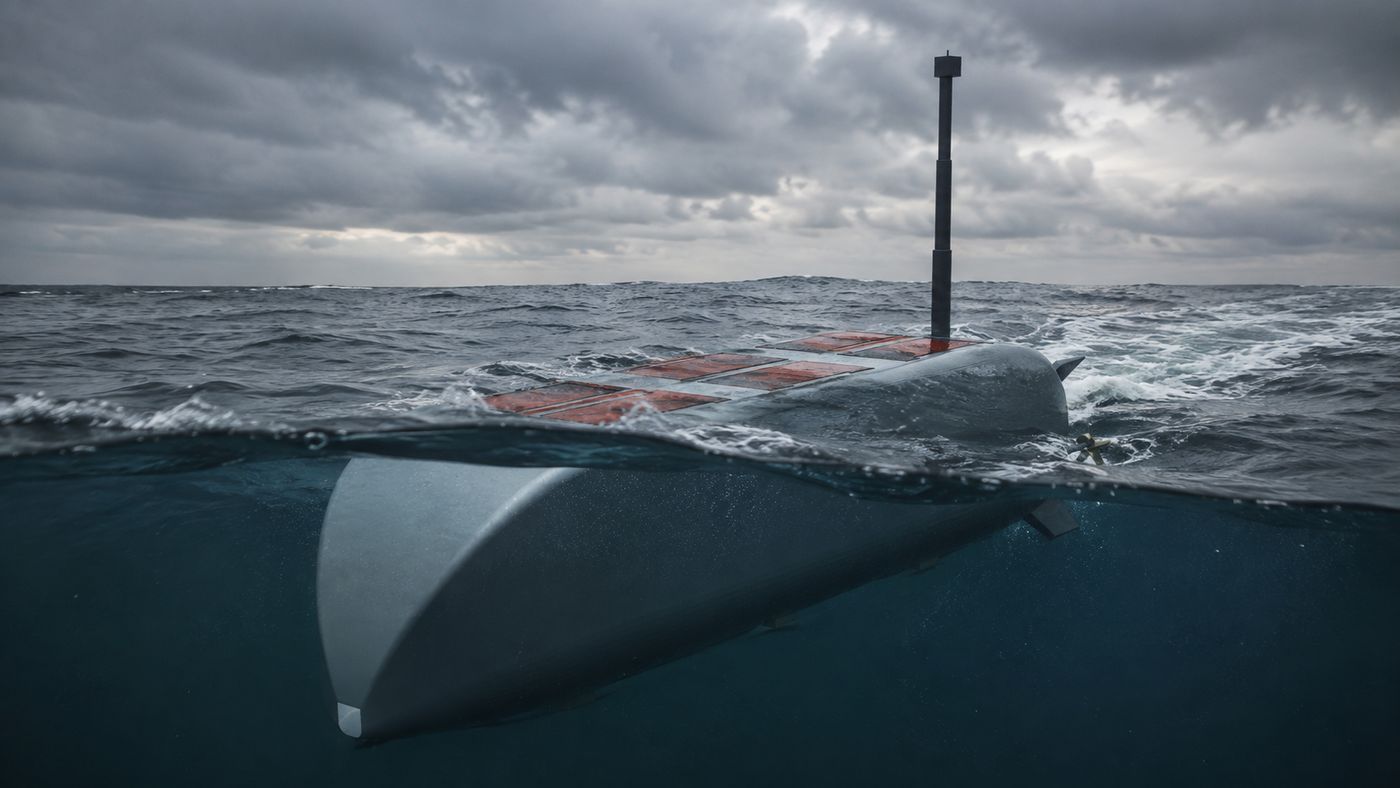
Moves up to 42.63 m³ and 17.0 t between two points without putting a crew or a manned hull at risk — resupply, prepositioning and shore-to-ship movement on a route a surface hull would not take.
In practice
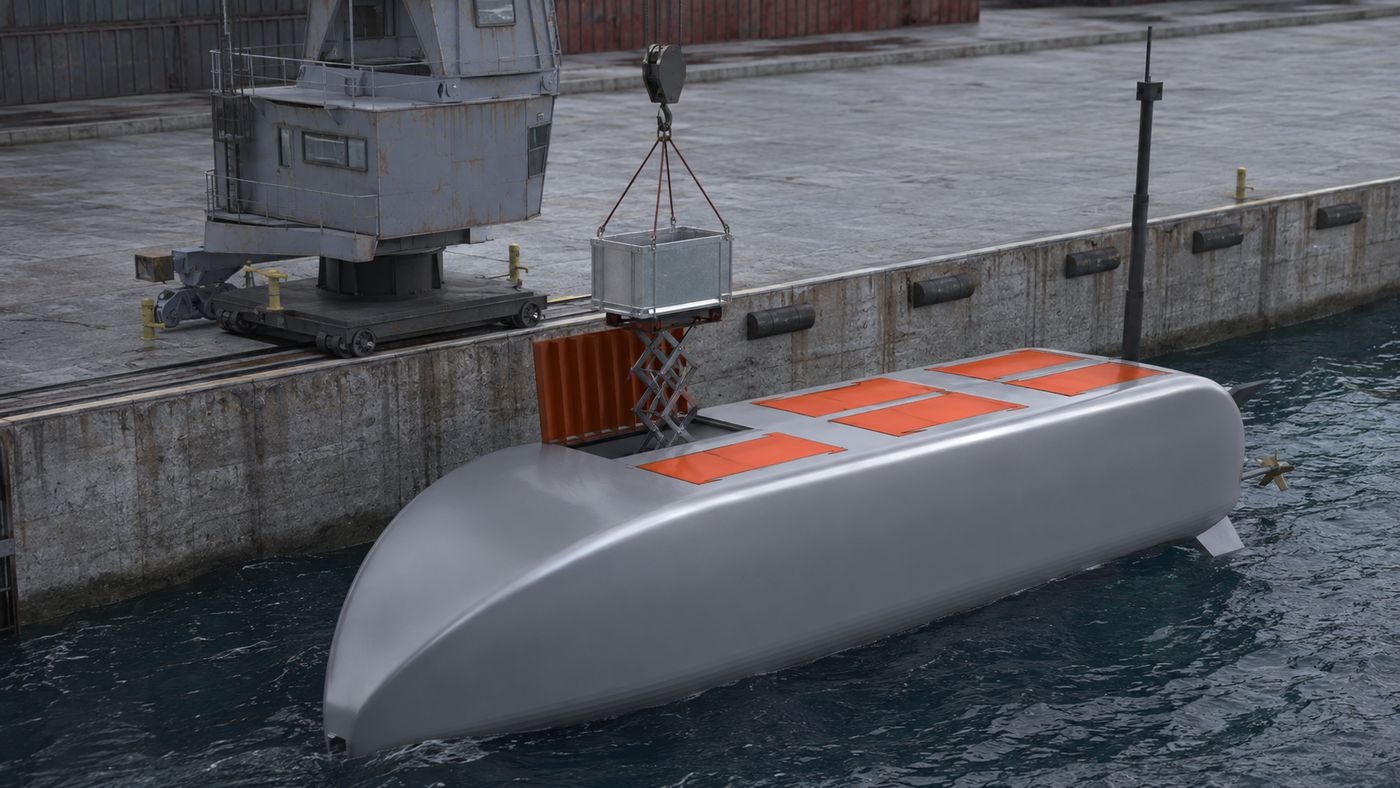
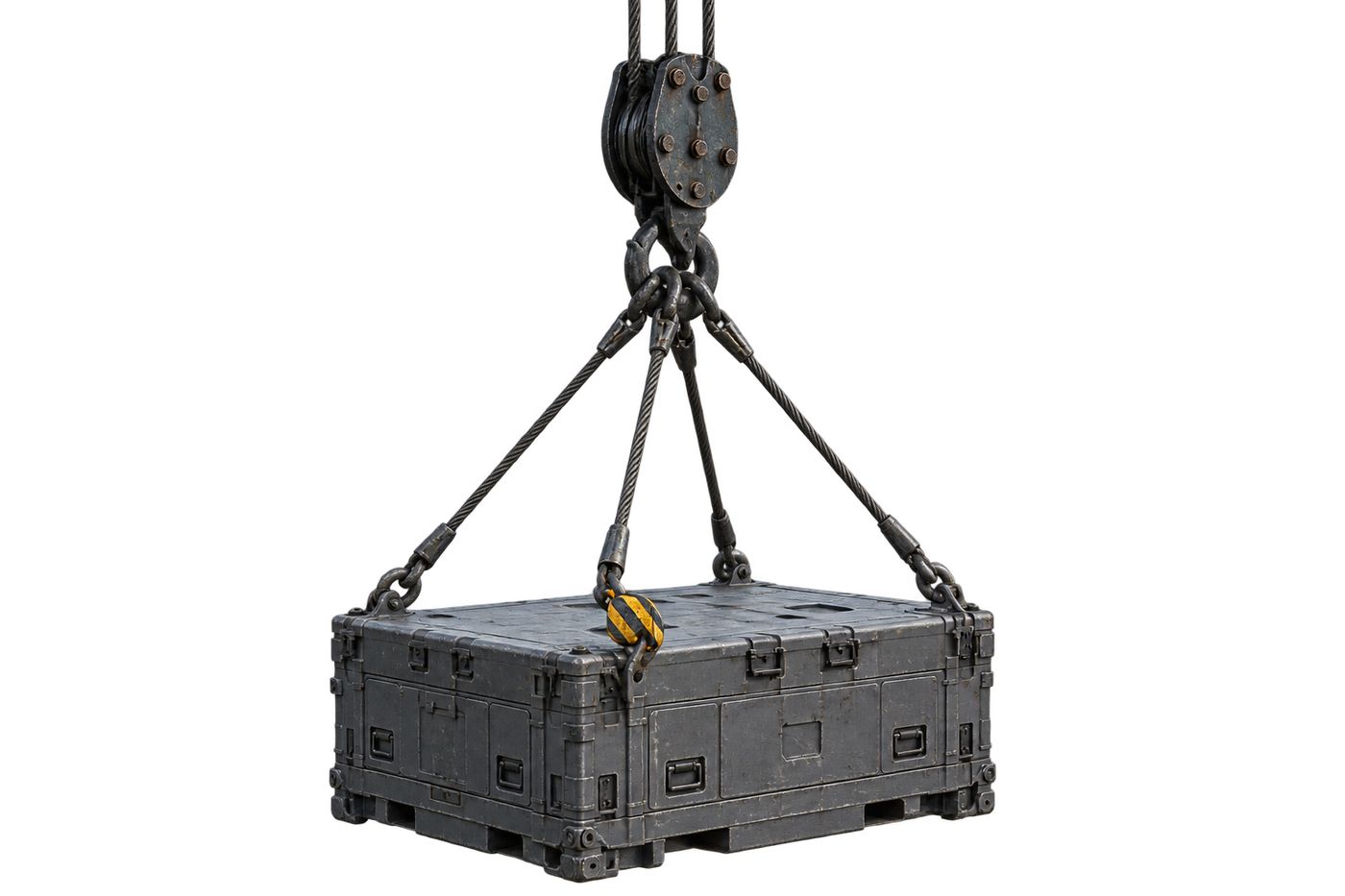
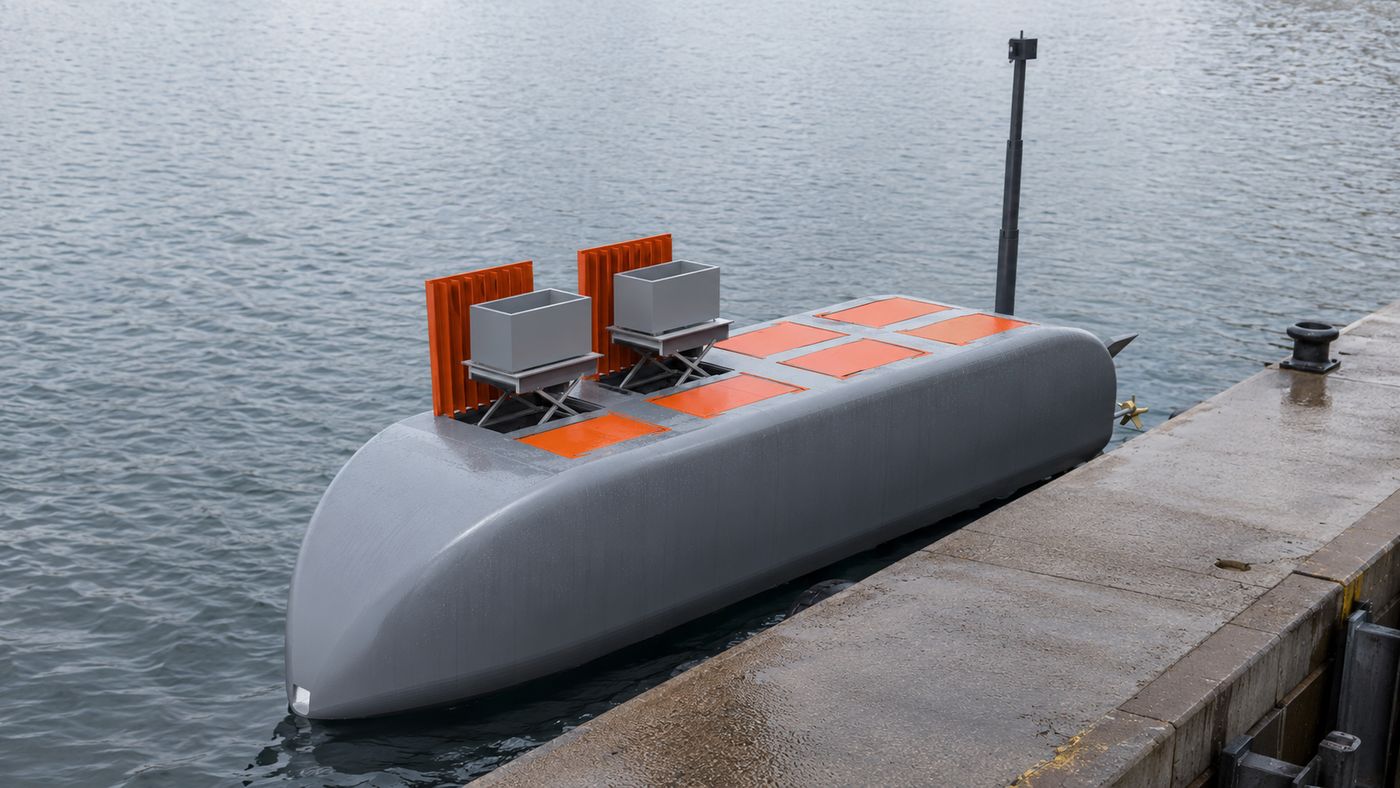
Loading and unloading are surface evolutions alongside, through six deck hatches, using the same quayside handling gear that moves a standard pallet. Nothing about the evolution needs a diver, a dock or a purpose-built terminal.
Reach
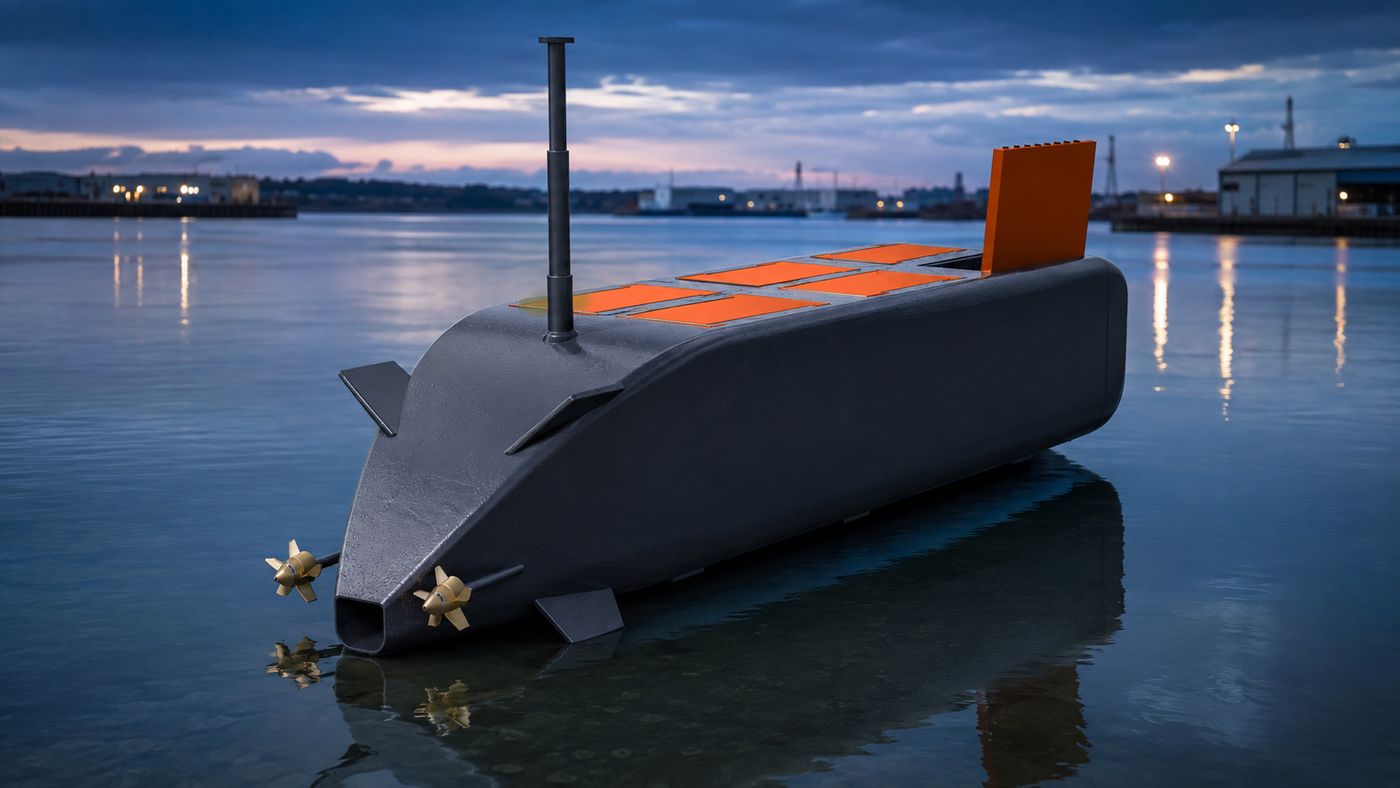
4,528 km of diesel transit at snorkel depth gets the vessel to the area. 486 km of battery endurance covers the part of the leg where being seen matters.
Turnaround
Six hatches, 6 modules, 3,071 kg apiece on the hook. A module comes out vertically on its own lift and is clear of the deck before a crane touches it.
Fleet economics
The hull is small enough to move on a low-loader and simple enough to consider in numbers. A route that is not worth a manned hull is worth one of these.
02 · Mission profile
Coast guard and port security
Carries hosted sensing payloads on a 486 km submerged leg at 4 kn, with 5,014 km of declared total range to reach the area and return — persistent presence across an approach, an anchorage or a chokepoint.
In practice
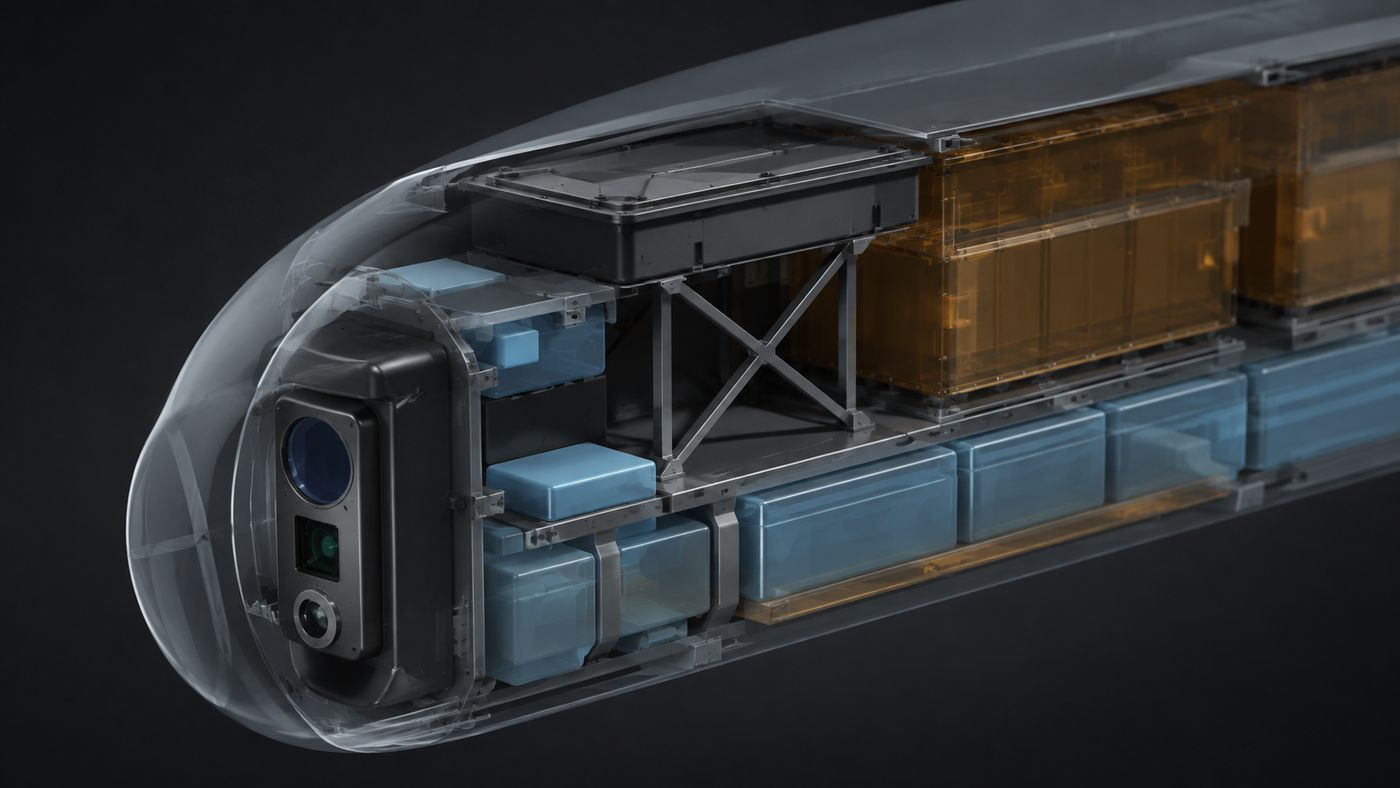
Sensing packages are integrated at fit-out and land on four-point flange mounts, with power and data run to dry one-atmosphere junction boxes inside the compartment.
Presence
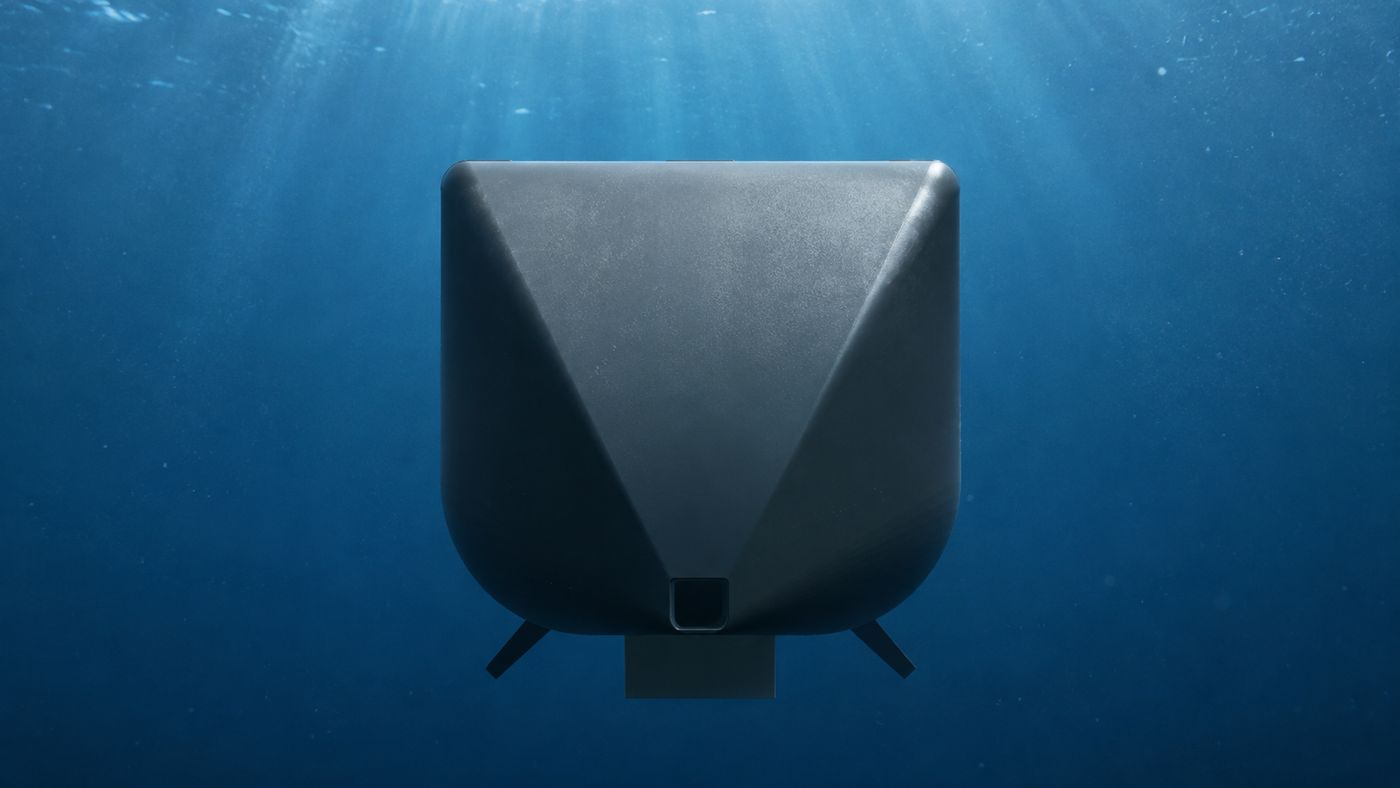
66 hours submerged on the pack at patrol speed, with 600 kWh usable and 8 kW of hotel load budgeted for an active payload.
Reporting
Four independent links, deliberately. An uncrewed vessel that loses its only link is a salvage problem, so the mast carries a high-rate satellite path, an inshore cellular path, an independent low-rate satellite path and a direct long-range link.
Sprint
12 kn for 3.56 hours on the pack when the picture changes and the vessel has to be somewhere else.
03 · Mission profile
Payload host for primes and integrators
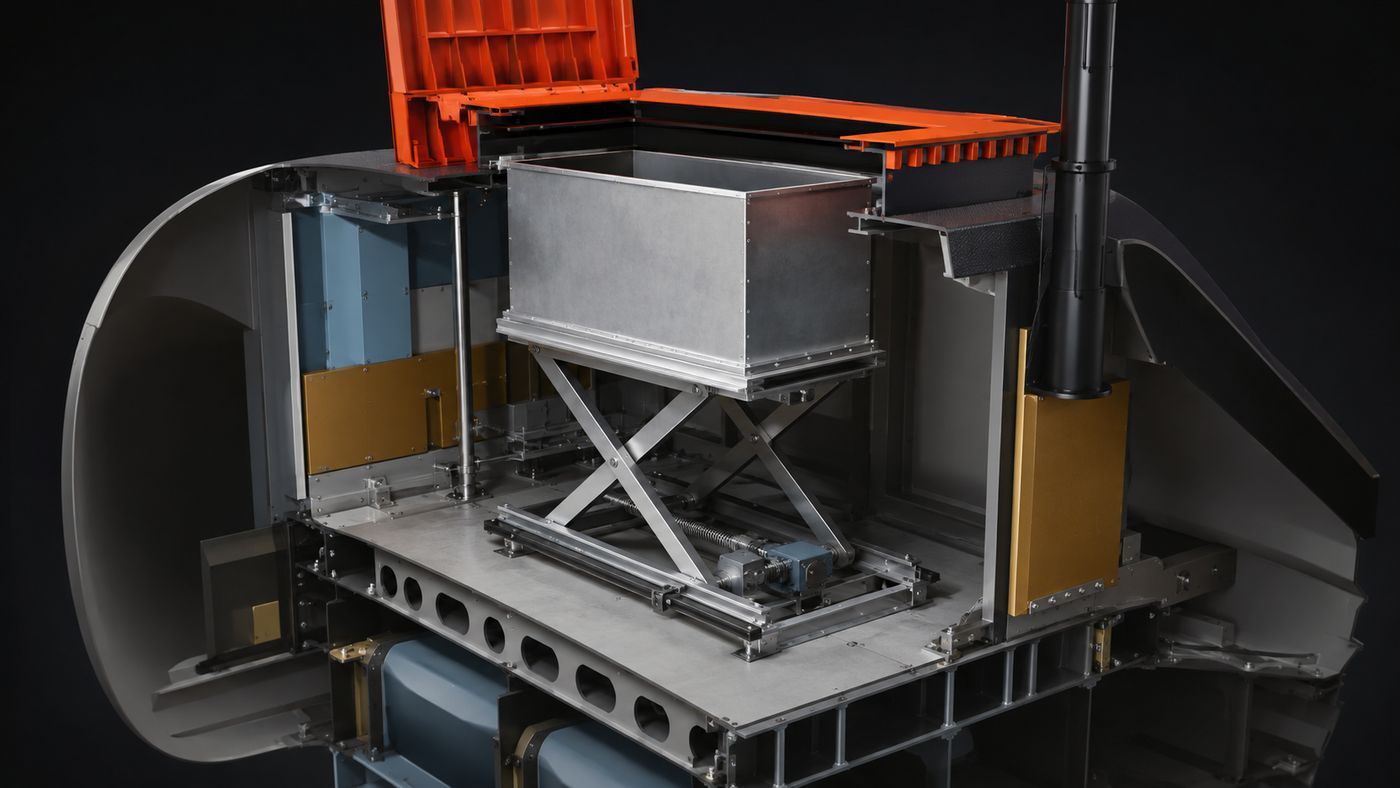
Three dry, pressure-balanced compartments of 14.21 m³ each on four-point flange mounts, with SubConn/MCBH penetrations already in the boundary. An integrator brings a module; the vessel brings the volume, the power and the range.
In practice
The range profile is built in two legs: 4,528 km of diesel transit at snorkel depth to reach the area, then 486 km of submerged endurance on battery once there.
The interface is already drawn
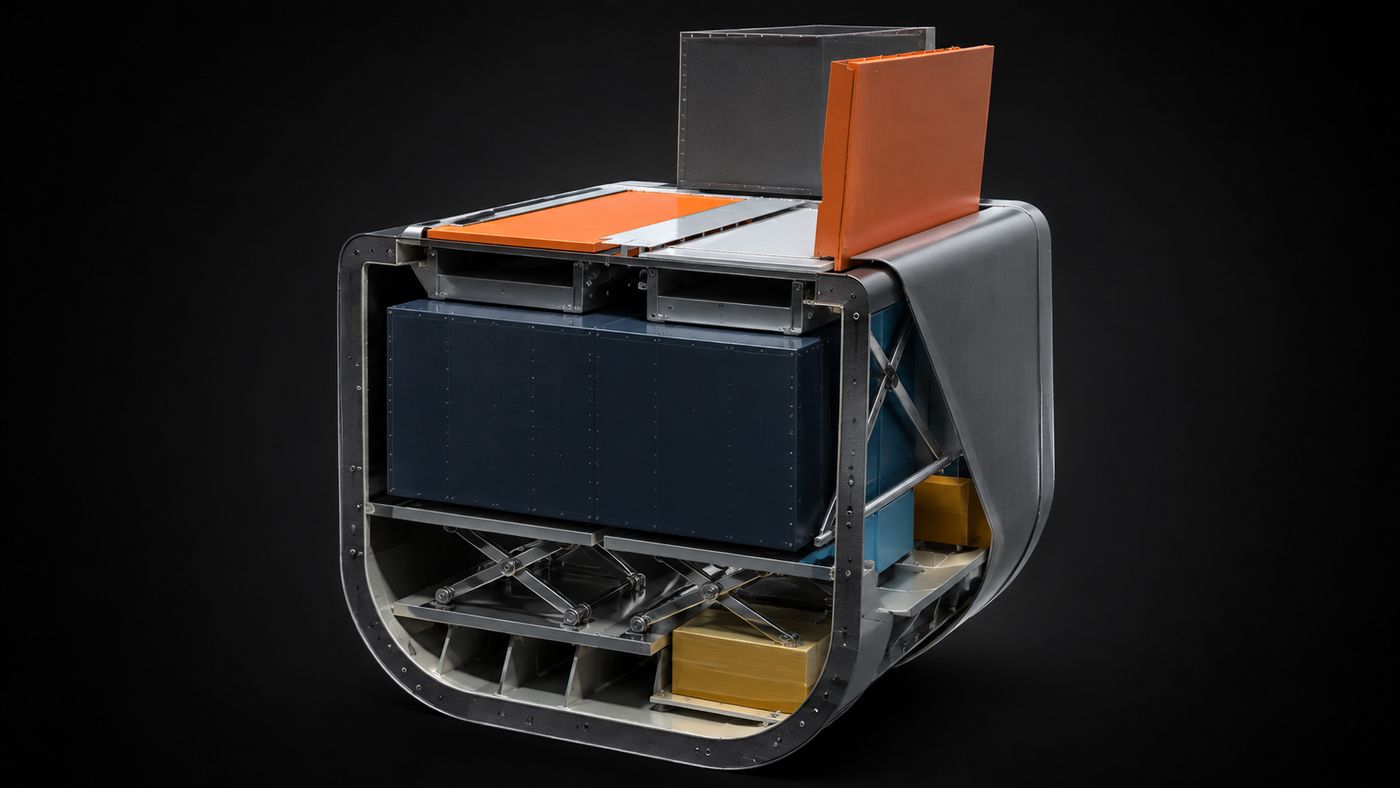
Bulkhead connectors, mount pattern, lift rating, clear opening and standing height are all in the model and all in the interface control drawings. An integration study starts from a dimension, not from a conversation.
Module envelope
2.44 × 1.09 × 1.10 m external, 2.874 m³ internal after the skin, 237 kg tare, 3,071 kg on the hook fully loaded.
Or don't use modules
Stowing loose in the compartment and lashing by hand through the 1.15 m opening recovers the full 42.63 m³. That is the right answer for dense or bulk cargo and the architecture supports both.
04 · Mission profile
Commercial subsea support
Dry transport of tooling, spares and consumables to and from an offshore site, with the payload arriving in the same condition it was loaded in. Compartments are pressure-balanced, not flooded, so nothing inside needs an immersion rating — ordinary topside kit travels as it is.
In practice
The vessel delivers a sealed, dry compartment to the site; transfer to a platform, vessel or quay is a surface evolution using conventional lifting gear.
No immersion rating
The compartment is charged with air to sea pressure, not filled with water. A pallet of drill consumables, a spare pump or a case of instrumentation goes in as it came off the shelf.
No confined-space entry
Every module sits on its own scissor lift with 1,670 mm of stroke. The module rises clear of the coaming and the crane only ever picks up something already standing proud of the deck. Nobody gets into the boat.
Weather
Loading is a surface evolution alongside. The vessel trims down and submerges for the passage, which is where a small hull normally loses its weather window.
If the volume is not enough
The same architecture solves at six, eight, ten and twelve bays.
The parallel middle body carries nothing but payload, so it can be lengthened without moving another system. Each variant below is a full independent solve — arrangement, weight, ballast, trim, stability and performance — not an interpolation between two known points.
| Variant | Length overall | Payload | Payload volume | Displacement | Declared range | BG |
|---|---|---|---|---|---|---|
| 6 bays | 18.00 m | 3 compartments | 42.63 m³ | 82.9 t | 5,014 km | 0.609 m |
| 8 bays | 21.60 m | 4 compartments | 56.84 m³ | 103.9 t | 4,477 km | 0.778 m |
| 10 bays | 25.20 m | 5 compartments | 71.05 m³ | 124.9 t | 4,030 km | 0.887 m |
| 12 bays | 28.80 m | 6 compartments | 85.26 m³ | 145.9 t | 3,660 km | 0.964 m |
Declared range falls across the family, because a longer hull carries more wetted surface on the same installed energy. Cargo deadweight is currently pinned at 17.0 t by the compensating tank capacity, so the extra volume arrives before the extra tonnage does. Fourteen bays does not solve: the ballast longitudinal centre lands off the hull, and that is the architectural ceiling.
Tell us the mission and we will tell you whether it fits.
Including when it does not. A profile the architecture is wrong for is worth ten minutes to establish, not six months.